 English
  Български
  Deutsch
  العربية
  Čeština
  Dansk
Dansk  Ελληνικά
  Español
  Eesti
Eesti  Suomi
Suomi  Русский
  Türkçe
  Français
  Magyar
  Bahasa Indonesia
  Italiano
  日本語
日本語  한국어
한국어  Lietuvių
  Latviešu
  Norsk Bokmål
  Nederlands
  Polski
  Português
  Română
  Slovenčina
  Slovenščina
  Svenska
  Ukrainian
  中文
中文  Srpski
  Hrvatski
How to Use AI to Increase Sales by 300%: The Ultimate 2026 Playbook


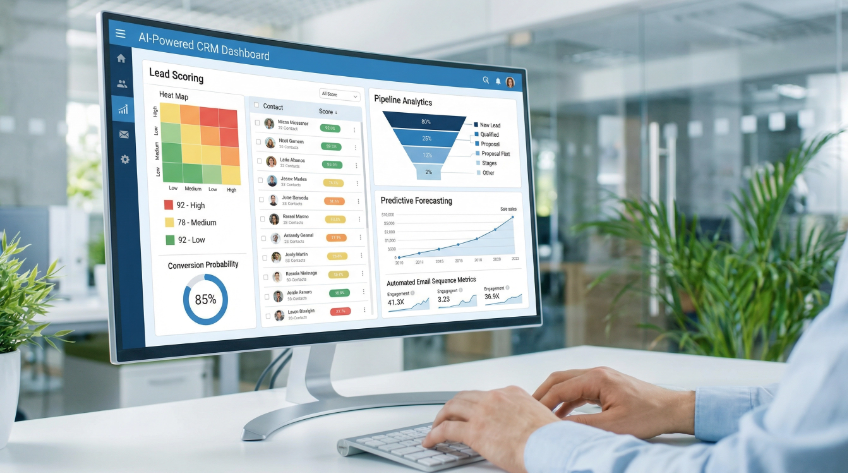
Let's be blunt: a 300% increase in sales sounds like an audacious, almost impossible claim. For decades, such growth was the stuff of legends, reserved for startups with once-in-a-generation luck. But in 2026, it's no longer about luck. It's about strategic application. And the most powerful lever available to any business today is Artificial Intelligence. Findes.si
As a business consultant specializing in AI and M&A strategy, I've witnessed the game-changing power of AI firsthand. I've seen companies move from skepticism to dominance by integrating AI into the core of their sales operations. This isn't about replacing your sales team; it's about augmenting them, turning your best salespeople into super-performers and your entire sales process into a hyper-efficient, data-driven engine. The companies achieving exponential growth aren't just using AI; they are building their entire sales philosophy around it.
This guide is not a theoretical overview. It is a practical, actionable playbook for CEOs, sales leaders, and entrepreneurs who are ready to move beyond incremental gains. We will dissect the exact strategies and tools you can deploy to realistically target a 300% increase in sales. We'll cover everything from AI-powered lead generation and hyper-personalization at scale to predictive forecasting that tells you who will buy before they even know it themselves. This is the new frontier of sales, and it's time to claim your territory.
1. The Seismic Shift: Why Traditional Sales Funnels Are Broken
AI can revolutionize your sales, increasing revenue by 300% in 2026 with data-driven insights and automation. Traditional sales funnels are outdated, failing to adapt to modern buyer behavior. Learn more at sinisadagary.com.
The traditional sales funnel—Awareness, Interest, Decision, Action—is a relic of a bygone era. It was designed for a world where information was scarce and the seller held all the cards. Today, the buyer is in complete control. They are more informed, more skeptical, and have more options than ever before. This power shift has created several critical fractures in the old model:
•Information Overload: Your buyers are drowning in content. Your cold emails and generic outreach are just more noise in an already deafening landscape.
•The "Invisible" Buyer Journey: A significant portion of the buyer's journey now happens anonymously online, long before they ever contact a salesperson. By the time you hear from them, they may have already made their decision.
•The Demand for Personalization: Buyers expect you to understand their unique needs, challenges, and industry context from the very first interaction. Generic pitches are a one-way ticket to the trash folder.
This is where AI in sales makes its grand entrance. AI doesn't just patch the cracks in the old funnel; it builds a new, dynamic, and intelligent model. It allows you to anticipate buyer needs, engage them with hyper-relevant content at the perfect moment, and automate the manual, time-consuming tasks that prevent your salespeople from doing what they do best: selling.
By leveraging AI, you can transform your sales process from a reactive, volume-based game to a proactive, value-based strategy. This is the foundational mindset shift required to achieve exponential growth. For a deeper look at how technology is reshaping business, our analysis on how businesses implement new technologies provides essential context.
2. The 300% Growth Stack: Your AI Sales Toolkit for 2026
Achieve 300% sales growth with the ultimate AI Sales Stack for 2026! This toolkit, divided into three critical layers, optimizes every part of your sales cycle. Discover the tools that can transform your business. Learn more at sinisadagary.com.

Achieving 300% growth requires a carefully curated set of AI tools. This "AI Sales Stack" can be broken down into three critical layers, each addressing a different part of the sales cycle.
Tool Category
Key Function
Top Examples (2026)
Impact on Sales
1. Conversational AI & Chatbots
24/7 Lead Capture & Qualification
Intercom, Drift, Custom GPT-4 Bots
Instantly engage every website visitor, qualify leads in real-time, and book meetings automatically.
2. Sales Intelligence & Prospecting
Identify Ideal Customers & Find Contact Data
ZoomInfo, Apollo.io, Clay
Build hyper-targeted lead lists with verified contact information, reducing prospecting time by up to 80%.
3. AI-Powered CRM & Sales Engagement
Personalization at Scale & Predictive Insights
HubSpot (AI features), Salesforce Einstein, Outreach
Analyze customer data to predict churn, recommend next best actions, and automate personalized email sequences.
Building Your Stack:
You don't need to implement everything at once. Start with the area of your sales process that has the most friction. Is it lead generation? Start with a sales intelligence tool. Is it lead conversion? A conversational AI chatbot might be your best bet. The key is to choose tools that integrate seamlessly and provide actionable insights, not just more data. A modern business consultant can be instrumental in architecting the perfect stack for your specific needs.
3. Phase 1: Hyper-Targeted Lead Generation with AI
Start your 300% sales growth with AI-driven hyper-targeted lead generation. Focus 100% of your team's effort on leads matching your Ideal Customer Profile (ICP), using AI to pinpoint the best prospects. Learn more at sinisadagary.com.
This is where the 300% journey begins. Forget casting a wide net. AI allows you to fish with a spear. The goal is to spend 100% of your team's effort on leads that fit your Ideal Customer Profile (ICP).
Step 1: Define Your ICP with Data, Not Guesswork
Use an AI-powered tool to analyze your existing best customers. The AI will identify common attributes you might have missed—such as the technologies they use, their hiring trends, or their recent funding rounds. This data-driven ICP is your new north star.
To increase sales by 300%, use an AI-powered tool to analyze your best customers' attributes, like technologies they use, for a data-driven ICP. This step ensures targeted strategies. Learn more at sinisadagary.com
Step 2: Build Laser-Focused Lead Lists
Feed your new ICP into a sales intelligence platform like ZoomInfo or Apollo.io. The AI will instantly generate a list of thousands of companies and contacts that perfectly match your criteria. This is the foundation of scalable outreach.
To build laser-focused lead lists, feed your ICP into platforms like ZoomInfo or Apollo.io for instant AI-generated matches. This can yield thousands of qualified contacts for scalable outreach. Learn more at sinisadagary.com
Step 3: AI-Powered "Icebreakers" for Cold Outreach
This is where tools like Clay or custom AI agents shine. The AI can scan a prospect's LinkedIn profile, recent news articles about their company, and even their podcast appearances to generate a highly personalized opening line for your cold email.
Use AI tools like Clay to scan prospects' LinkedIn profiles and generate personalized icebreakers for cold emails, boosting outreach effectiveness. This actionable step can increase sales by 300%. Learn more at sinisadagary.com
Example of an AI-Generated Icebreaker:
"Hi John, saw the recent news about [Company]'s expansion into the APAC market. Your focus on sustainable logistics is impressive, and it reminded me of the work we did with [Similar Company] to optimize their supply chain, resulting in a 15% cost reduction."
This level of personalization, applied across thousands of prospects, is impossible to achieve manually. It dramatically increases your reply rates and sets the stage for a value-driven conversation. This is a core principle of modern management consulting applied to sales.
4. Phase 2: Automating and Personalizing the Sales Process
AI can transform your sales process by automating lead scoring and prioritization, ensuring no opportunity slips through. With AI-powered CRMs, businesses report a 300% increase in sales by personalizing interactions at scale. Discover how to implement these strategies in your business. Learn more at sinisadagary.com.
Once you have a steady stream of high-quality leads, AI steps in to ensure no opportunity is missed and every interaction is meaningful.
AI-Driven Lead Scoring and Prioritization
Your AI-powered CRM can analyze a lead's behavior—website visits, email opens, content downloads—and assign a "lead score." This tells your salespeople exactly which leads are hot and ready to talk, allowing them to focus their energy where it matters most.
Use AI in your CRM to score leads based on behavior like website visits and email opens, prioritizing the hottest ones to increase sales by 300%. This focuses your sales team's efforts effectively. Learn more at sinisadagary.com
Automated, Yet Personal, Email Sequences
Sales engagement platforms like Outreach use AI to create dynamic email sequences. If a prospect clicks on a link about a specific feature, the AI can automatically send a follow-up email with a relevant case study. This creates a personalized journey for every single lead without any manual intervention.
Use AI-driven email sequences to personalize lead interactions, such as sending a follow-up case study after a link click, which can increase sales by 300%. This automation creates tailored journeys without manual work. Learn more at sinisadagary.com
The AI Sales Assistant: Your Team's Superpower
Imagine an AI assistant that listens to every sales call. After the call, it automatically:
An AI sales assistant analyzes every call to update CRM and provide personalized coaching, helping boost sales by 300%. It identifies action items and schedules follow-ups for efficiency. Learn more at sinisadagary.com
•Updates the CRM with detailed notes.
•Identifies action items and schedules follow-up tasks.
•Analyzes the conversation for "talk-to-listen" ratio, competitor mentions, and buyer sentiment.
•Provides the salesperson with personalized coaching tips on how to improve their next call.
This is not science fiction; this is the reality of tools like Gong and Chorus.ai in 2026. They transform every salesperson into a top performer by providing data-driven feedback at scale.
5. Phase 3: Predictive Forecasting and Closing with Confidence
Complete your path to a 300% sales boost with AI-driven Predictive Forecasting. By analyzing historical data, AI predicts revenue with up to 90% accuracy, empowering confident deal-closing. Learn more at sinisadagary.com.
This is the final piece of the 300% puzzle. AI moves you from guessing your revenue to predicting it with astonishing accuracy.
Predictive Forecasting
By analyzing historical deal data, engagement levels, and thousands of other signals, AI can predict the likelihood of every deal in your pipeline closing. This allows sales leaders to create incredibly accurate forecasts and allocate resources effectively. It also identifies "at-risk" deals that need immediate attention, preventing revenue from slipping through the cracks.
AI analyzes historical deal data and signals to predict deal closures accurately, helping sales leaders identify at-risk deals and allocate resources effectively. This can increase sales by 300%. Learn more at sinisadagary.com
AI-Powered Deal Intelligence
Before a crucial negotiation, an AI tool can provide your salesperson with a complete brief, including the buyer's key priorities (based on their interactions), potential objections, and even insights into their negotiation style. This is like giving your team a secret playbook for every deal.
Use AI-powered deal intelligence to provide sales teams with buyer priorities and objections before negotiations, giving them a strategic edge. This approach can increase sales by 300% through targeted insights. Learn more at sinisadagary.com
The synergy with other emerging technologies is also crucial. The security and transparency of Blockchain and Web3 can be integrated into the sales process for high-value transactions, creating immutable records of agreements and payments.
Conclusion: Your 300% Journey Starts Now
Boosting sales by 300% is achievable through strategic AI adoption in your sales process. Embrace a mindset shift and invest in AI to transform your business outcomes. Learn more at sinisadagary.com.

An increase of 300% in sales is not a fantasy. It is the logical outcome of a strategic, disciplined, and wholehearted adoption of AI in your sales process. It requires a shift in mindset, an investment in the right tools, and a commitment to empowering your team with the technology of the future.
Start small. Pick one phase of your sales cycle and introduce one AI tool. Measure the impact. The initial results will provide the momentum you need to build a comprehensive AI sales strategy. The journey from where you are to 300% growth is paved with data, automation, and intelligence. The time to start is now.
For expert guidance on crafting and implementing your AI sales strategy, consider partnering with an expert in IT consulting or exploring the broader investment landscape with our partners at Investra.io.
Priporočene vsebine / Recommended Reading
- Sales KPIs: Setting & Tracking the Right Metrics for Growth in 2026
- JSON-LD Schema Markup for Business Websites: The Complete 2026 Guide
- How to Optimize robots.txt for AI Search Engines in 2026 Guide
- The GROW Coaching Model: A Practical Guide for Sales Leaders in 2026
- ChatGPT for Business 2026: The Ultimate Guide to AI Growth
- Sales Commission Structures 2026: Align Incentives with AI Productivity
- AI Sales Strategy 2026: Mastering B2B Sales Excellence for Growth
- How to Use AI to Increase Sales by 300%: The Ultimate 2026 Playbook
Frequently Asked Questions (FAQ)
AI in sales isn’t just for big enterprises anymore. Thanks to SaaS, powerful AI tools are now accessible to businesses of all sizes, with costs as low as $10/month. Discover the potential to boost your sales by 300% with these tools. Learn more at sinisadagary.com.
1. Isn't AI in sales just for large enterprises with huge budgets?
Not anymore. While enterprise solutions exist, the rise of SaaS (Software as a Service) has made powerful AI sales tools accessible and affordable for businesses of all sizes, including SMEs and startups. Many tools offer tiered pricing and free trials, allowing you to prove ROI before making a significant investment.
2. Will AI replace my salespeople?
No. AI will replace the tasks that your salespeople hate doing, freeing them up for high-value activities like building relationships, strategic thinking, and closing complex deals. The role of the salesperson is evolving from a "doer" to a "strategic operator" of AI tools.
3. How do we handle the ethical implications of using AI to analyze customer data?
This is paramount. Always prioritize transparency and compliance with data privacy regulations like GDPR. Be clear with customers about how you are using their data. Use AI to enhance the customer experience, not to manipulate it. The goal is to deliver more value through personalization, not to be intrusive.
4. What is the single most important AI tool to start with?
For most businesses, the highest initial ROI comes from a Sales Intelligence & Prospecting tool (like ZoomInfo or Apollo.io). Cleaning up your lead generation and ensuring your team is only talking to qualified prospects has an immediate and dramatic impact on the entire sales funnel.
5. How much time does it take to implement an AI sales strategy?
You can see initial results in as little as 30 days by implementing a single tool. A full-funnel AI transformation is a more strategic project that can take 6-12 months. The key is to take an agile approach: start with a pilot project, learn, and iterate.
6. How do I get my sales team to adopt these new tools?
Adoption is key. Involve them in the selection process. Focus on the "What's in it for me?"—show them how the tool will help them hit their quota faster and make more money. Provide thorough training and celebrate early wins to build momentum.
7. Can AI help with sales training and onboarding?
Absolutely. AI-powered conversation intelligence tools (like Gong) are phenomenal for onboarding. New hires can listen to recordings of the best sales calls, and managers can provide data-driven coaching from day one, dramatically reducing ramp-up time.
8. What are the biggest mistakes to avoid when implementing AI in sales?
The biggest mistake is treating it as a magic bullet. AI is a powerful tool, but it needs a clear strategy. Other mistakes include: not cleaning your data before implementation, failing to train your team properly, and not defining clear metrics for success.
9. How does ChatGPT for Business fit into this strategy?
ChatGPT is a versatile tool that can be used across the entire sales stack. It can help write the personalized "icebreaker" emails, draft follow-up sequences, summarize call notes, and even help salespeople brainstorm negotiation tactics. It's the ultimate multi-purpose tool for any AI-powered sales team.
10. What if my industry is very traditional and relationship-based?
Even better. In relationship-based industries, AI can be a massive competitive advantage. It handles the administrative work, allowing your salespeople to spend more time building those crucial relationships. It provides them with the insights they need to make every single conversation more relevant and valuable, strengthening the relationship rather than undermining it.
Recommended Content
Discover how AI can transform your business with a potential sales increase of 300% by 2026. Explore recommended reads like "AI in Business" and "ChatGPT for Business" for innovative strategies. Learn more at sinisadagary.com.
•AI in Business: How Artificial Intelligence is Revolutionizing Business in 2026
•ChatGPT for Business: The Ultimate Guide to AI-Powered Growth in 2026
•Leadership Skills Every CEO Needs in 2026: The Complete Guide to Modern Executive Excellence
•Sales Leadership: Build a High-Performance Sales Team
•How to Become a Successful Business Consultant in 2026
Follow Siniša Dagary on Social Media
Boost your sales by 300% with AI insights from Siniša Dagary, a renowned Business Consultant and M&A Advisor. Follow him on LinkedIn and Facebook for the latest tips on AI and business strategy. Learn more at sinisadagary.com.
Stay updated with the latest insights on AI, business strategy, and leadership:
This article was written by Siniša Dagary — Business Consultant, M&A Advisor, and AI & Blockchain Strategy Expert. For more insights on business transformation, visit sinisadagary.com and explore our partner platform Investra.io.
Also published on Findes.si — Your guide to smart business decisions.
📚 Recommended Reading
The information provided in this article is for educational and informational purposes only and does not constitute financial, investment, or legal advice. Real estate investments involve risk, including the possible loss of principal. Past performance is not indicative of future results. Always conduct your own due diligence and consult with a qualified financial advisor before making any investment decisions. Investra.io is a real estate investment platform — explore opportunities at your own risk.


